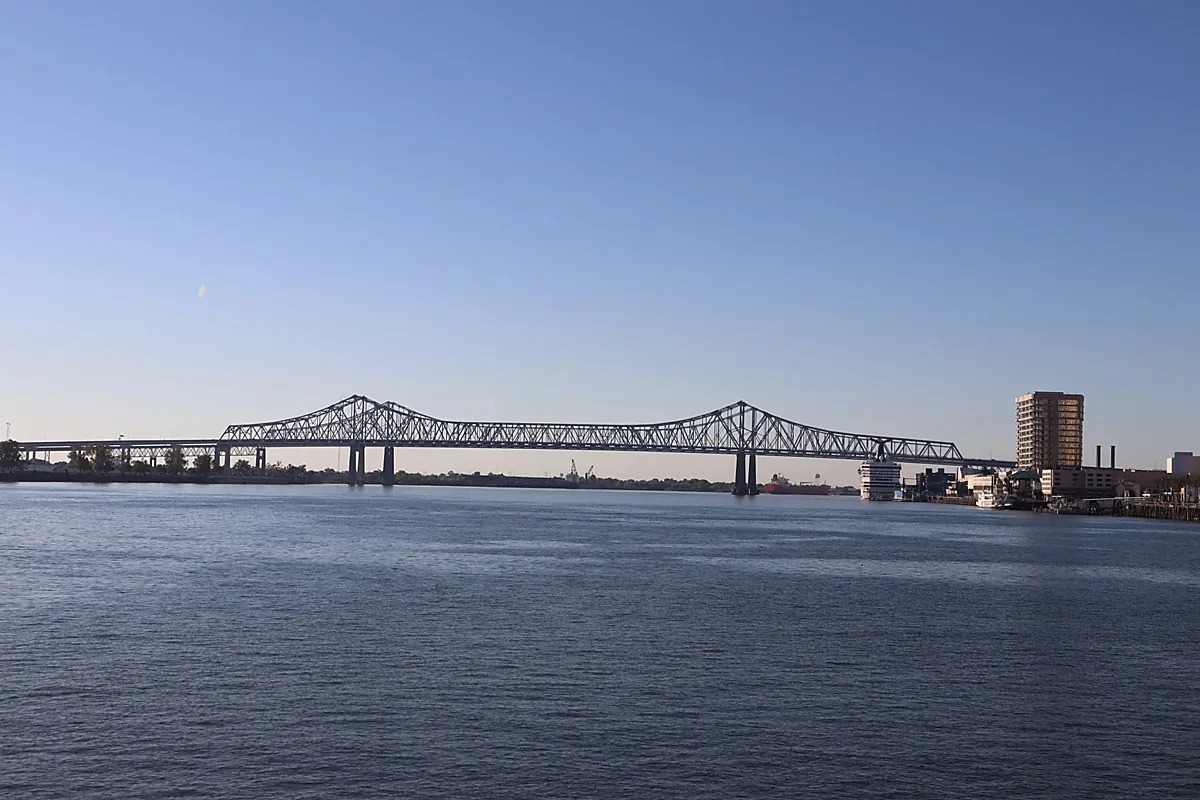
The first official account of how a laden tanker came to hit a moored passenger vessel in broad daylight arrived on Sunday, at the National Transportation Safety Board on scene briefing in New Orleans. Investigators said preliminary data from the voyage data recorder of the asphalt tanker Atlantic Asphalt shows that at about 12:26 p.m. on Friday 13 November, as the ship travelled upriver near the Crescent City Connection bridge, she suffered what investigator in charge Bart Barnum called a steering casualty, which left her rudder remaining to starboard. The tanker veered toward the east bank of the Mississippi. About two minutes later, at about 12:28 p.m., she struck American Cruise Lines riverboat American Heritage, which was moored at the Thalia Street Wharf taking passengers off at the end of a cruise. "Our preliminary information is that the riverboat capsized in about 22 minutes," board member John DeLeeuw told reporters.
The human outcome, given that sequence, is the remarkable part of the record. The board counted 140 passengers and 50 crew aboard American Heritage, 190 people in all, and every one of them survived and was accounted for. Thirty two people were taken to hospital, among them two police officers who had responded to the scene, none with critical injuries, and six remained in hospital on Sunday. The count also revises the first day figures: the Port of New Orleans initially reported about 129 passengers aboard, the number carried in early coverage including our own report of 13 November. Atlantic Asphalt carried a crew of 19 and one local pilot, and was bound upriver for an oil facility at Reserve, Louisiana.
What the recorder shows, and what it cannot yet say
The voyage data recorder was recovered on Saturday 14 November, and investigators have downloaded more than nine hours of it: bridge audio, rudder angle, main engine revolutions, vessel course and speed. The audio captured sounds consistent with the ship whistle and warnings called over the marine radio in the minutes before impact, a detail that matters because it speaks to what the tanker crew knew and when they knew it. The board has the tanker speed data but is still analysing it before releasing figures. What the recorder cannot yet answer is the central question: why the steering failed. Barnum was explicit that a steering casualty can have many different causes and that identifying this one is a focus of the investigation. Investigators are also examining whether the tanker anchors were deployed as she veered, and how the crew responded in the two minutes available to them.
The process from here is set. The board investigation is not a criminal inquiry and does not assign blame, a point DeLeeuw made at the briefing. Interviews with the American Heritage crew are under way, and interviews with the tanker crew were scheduled to begin on Monday and run through the week. The board has asked anyone with video or photographs of the collision to send them to investigators. A preliminary report is expected within about 30 days, which places it in mid December, and the final report, with probable cause and any safety recommendations, is expected in 18 to 24 months.
The legal track begins
Alongside the safety investigation, the first civil claim has been filed. The Board of Commissioners of the Port of New Orleans has sued the tanker owner, Nave Shipping SA, and her manager, Thome Ship Management, seeking at least 1 million dollars for damage to the port terminal. The filing alleges that the collision resulted from the negligence of the tanker side. Those are allegations in a court filing, not findings, and they have not been tested in court. The tanker manager has said Atlantic Asphalt was built in 2017 and is registered in the Marshall Islands. American Cruise Lines, for its part, confirmed on Friday that its guests and crew were evacuated and that it is coordinating with the Coast Guard and local authorities.
What remains open
Three questions now run in parallel. The first is mechanical: what failed in the steering gear of a nine year old tanker, and whether the failure mode is one other ships share. The second is operational: what happened on both bridges and on the wharf in the two minutes between the casualty and the impact, and in the 22 minutes in which a moored cruise vessel, with her passengers already in the process of leaving her, went over on her side. The third is practical: the condition of American Heritage, which remains capsized at the wharf in the photographs published over the weekend, and how and when she can be righted and surveyed. Salvage planning is under way, according to city officials, but no plan for righting her has been announced. Yacht and Ocean will report the board preliminary report when it is published, and any salvage plan when one is confirmed by the parties involved.
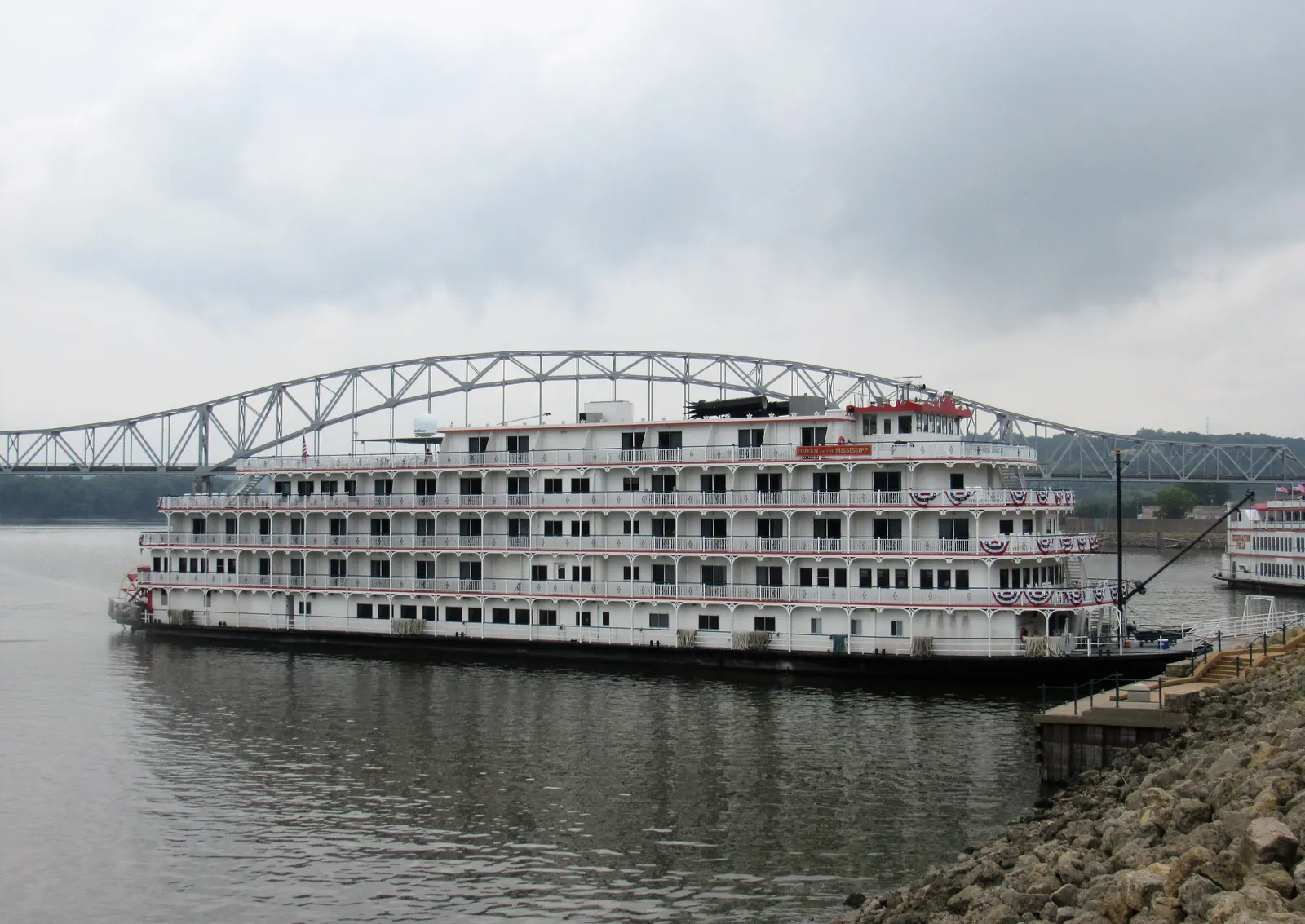
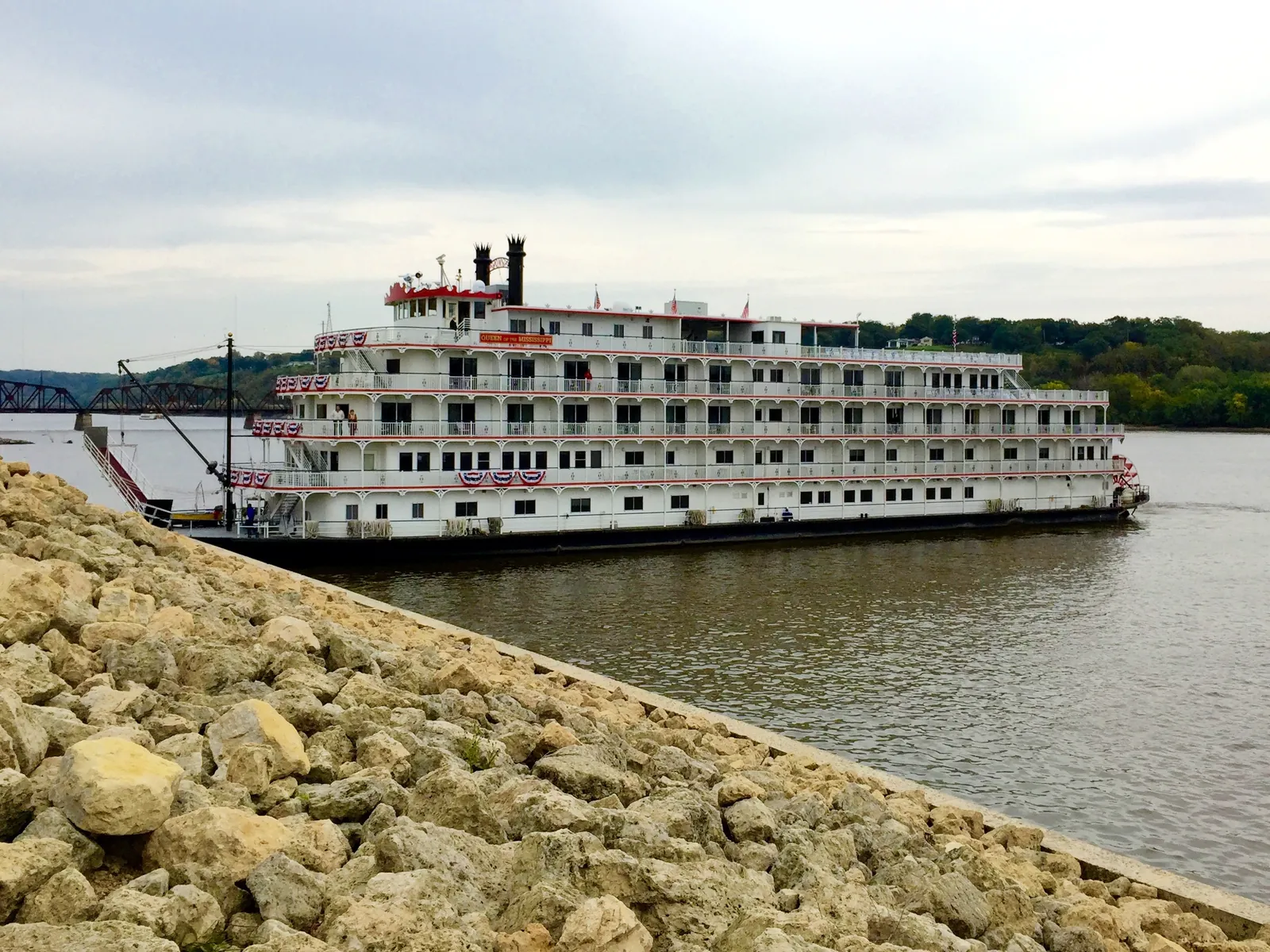
Photography: Farragutful, CC BY-SA 4.0 via Wikimedia Commons. The riverboat in an earlier season, under her former name.