The DAME Design Awards ended their 35th anniversary edition with a result the competition has never produced before. At the official opening of Metstrade in Amsterdam on Tuesday 17 November, jury chair Andre Hoek announced three joint overall winners: the Garmin Signal VHF and Remote system, the Scanstrut Wireless Powered Navigation Pole Light, and the Teignbridge Propellers International Controllable Pitch Propeller, known as the T-CPP. Alongside the overall result, the jury named the winners of nine categories, gave 19 special mentions and presented an Environmental Design Award, all drawn from a field of 74 nominated products. Metstrade, which organises and hosts the awards, says this year drew 153 entries, a record since charitable entry fees were introduced in 2008, and that the 74 nominations were the highest number in two decades.
Hoek explained the decision in the announcement released by Metstrade on the morning of the opening. "In the final stage the Jury became evenly split and completely unable to separate three top choices for the Dame Overall Winner," he said. "Believing that this 35th anniversary year deserved a special celebration of design, we recommended, and the organising team kindly accepted, that we take the unprecedented step of recognising all three of our top choices as joint Overall Winners." The entry fees behind that record field raised 25,725 euros for the Royal Netherlands Sea Rescue Institution, the KNRM, the voluntary rescue organisation founded in 1824 that Metstrade named as this year recipient of the DAME charitable donation.
A radio that records what you missed
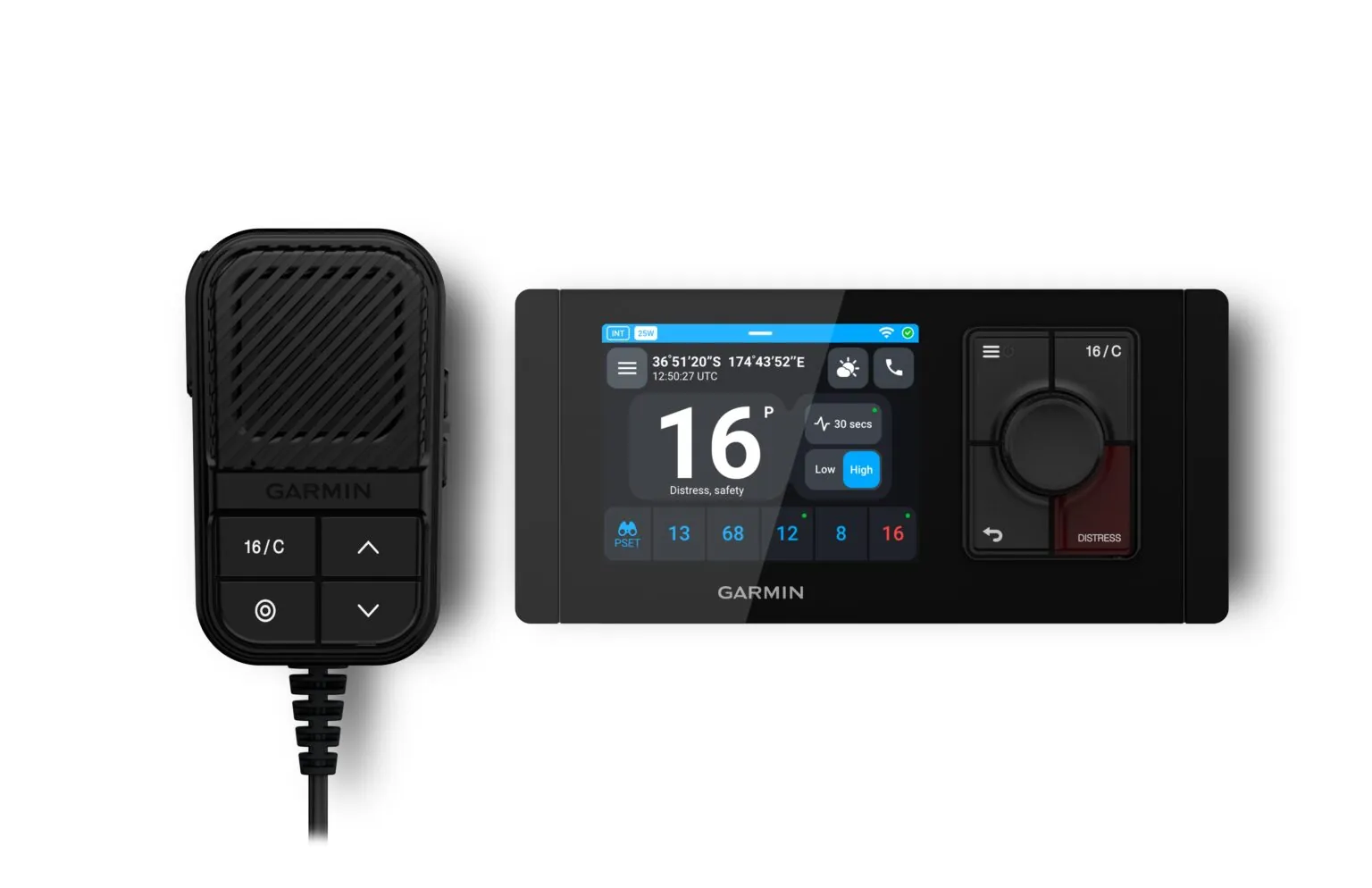
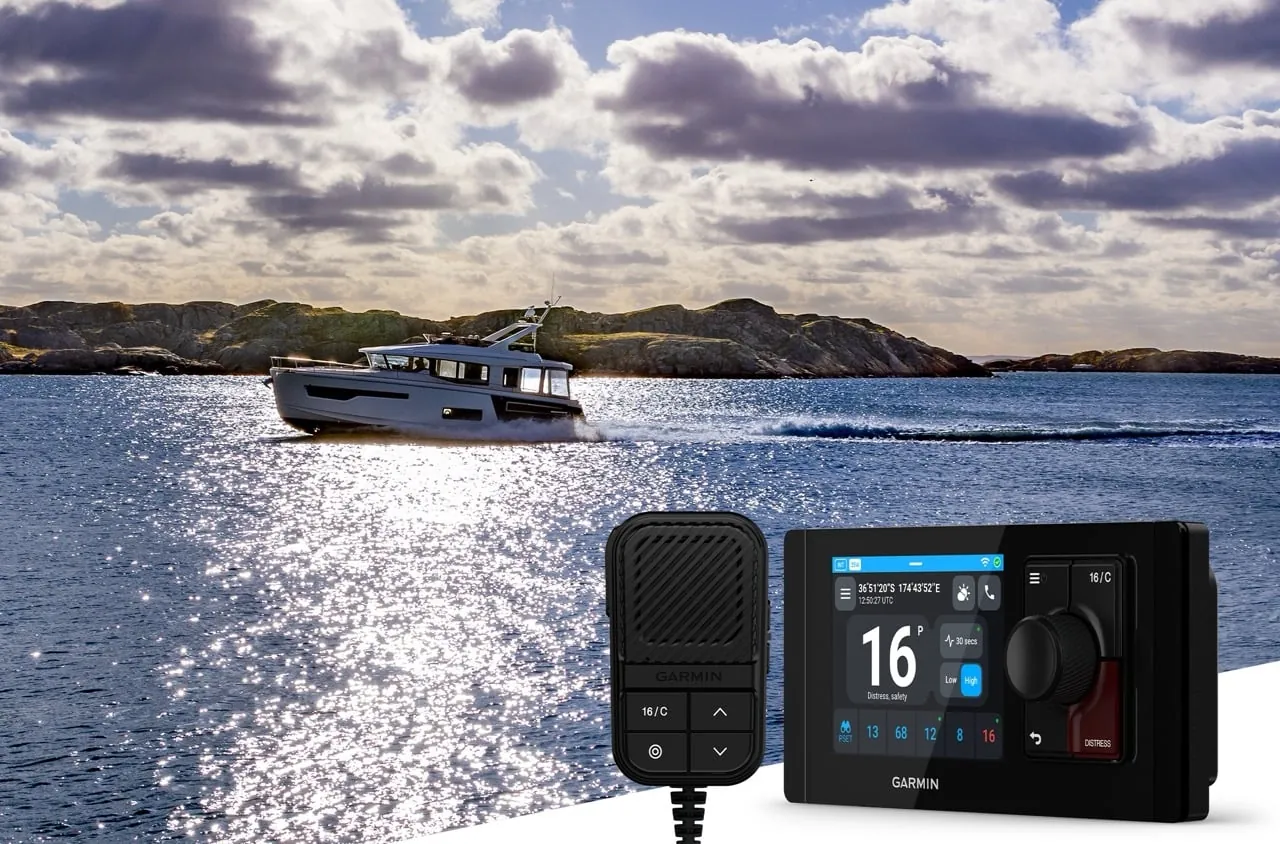
Garmin takes the overall DAME title with a product that rethinks the most familiar box on the helm. The Signal range pairs a marine VHF radio with a fully functional remote station, so the radio can be worked from a second helm or flybridge over a single network connection. The jury singled out the built in AIS, transmitting and receiving through a single antenna, the close watch the set keeps on the channels in use, and a replay memory covering the last three minutes of any transmission, the answer to the everyday moment when a call sign or a position is spoken once and lost. NMEA integration and WiFi connectivity to the Garmin ActiveCaptain app allow remote programming, and the jury noted that the radio and its visually identical remote take their styling from the Garmin Fusion audio range. Garmin announced the Signal VHF 220 at 999.99 dollars and the Signal VHF 400 at 1,499.99 dollars when the range was launched in May, with the RM 100 remote station at 699.99 dollars.
The smallest winner may be the most useful
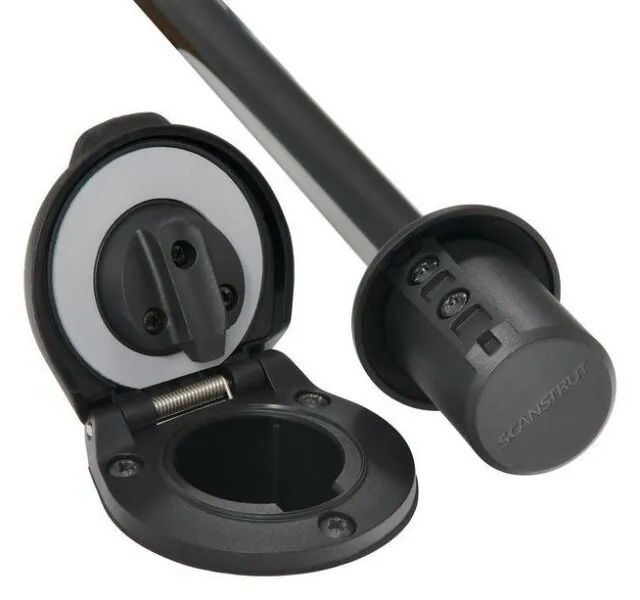
Scanstrut, an overall winner for the second time after its 2017 success, won with the humblest object on the list: the all round white navigation light on a pole that small boats buy, lose and buy again. The jury account describes a robust socket with an integrated drain and a sealed magnetic power connection, which removes the exposed metal plug and socket contacts whose corrosion is the usual cause of failure. Sliding the pole home closes the cover over its base and switches the light on. Near the tip of the pole, set flush into it, sits a bright all round LED, and the jury lists pole lengths of 600 millimetres and 1,200 millimetres. The jury verdict was succinct: "Elegant, brilliantly executed," and, in its words, exactly the kind of design the awards exist to encourage. Scanstrut lists the light as coming soon, with no price published yet, and fits it with a Perko all round white LED visible at two nautical miles.
A propeller that changes its shape, not its angle
The third winner works at the other end of the boat. A conventional controllable pitch propeller rotates each whole blade to change pitch. The Teignbridge T-CPP keeps its blades fixed and instead moves trailing edge sections on those blades to adjust their camber, a principle the jury compared to aircraft control surfaces. On the jury assessment, the arrangement is designed to improve efficiency by up to 20 percent over a fixed pitch propeller, helped by blade winglets that reduce losses at the tips. Because the fixed blade keeps its optimised shape, the system needs fewer moving parts, the hub can be slimmer, and the jury notes that it can be retrofitted to vessels on conventional shafts without changes to the stern gear or the gearbox. For owners whose yachts divide their lives between harbour speed, cruising speed and the occasional fast run, pitch that adapts to load and weather is a direct saving in fuel and emissions.
The category winners in full
Beyond the overall trio, the Personal Equipment award went to the Mustang Women’s Tidal Waterproof Bib, and Onboard Facilities, Comfort and Entertainment to the Blue-Airco Multizone Control Kit, which lets one air conditioning unit serve two independently controlled zones. Navigation and Communication was shared by Garmin and Scanstrut, the tie that foreshadowed the overall result. Electronic and Electrical Systems went to the MOTA Cooling System H2 Marine One, a hydrogen fuel cell system, Propulsion and Dynamics to Teignbridge, Deck Equipment to the Facnor Tackfurl, Safety and Security Aboard to the OHNOH2O WIF-Pro, which detects water in fuel at the filter, and Manufacturing, Support Products and Materials to the Sensiblue S4. The Environmental Design Award went to the August Race Oceans Assured Compliance Platform, submitted by Lankhorst Taselaar. All 74 nominated products were displayed in the DAME showcase in Hall 13 during the show, which ran from 17 to 19 November at RAI Amsterdam.
What the result says about the industry
Read together, the three overall winners describe where marine equipment design is actually moving. None of them is a bigger screen or a faster headline number. One removes missed radio calls, one removes a corroded connector, and one removes wasted fuel, each by rethinking a mature product rather than inventing a new category. That the jury chose to honour all three is a fair summary of the 2026 equipment market: the gains now come from small, well judged removals of friction, spread across the whole boat.
Photography: Photography courtesy of Garmin. The Signal VHF and remote system is one of the three joint overall winners.