Every superyacht needs a tender, and most of them end up with the same one. The Williams DieselJet 505, at just over five metres, is the industry default for yachts of 30 metres and up, and its dominance is easy to explain: it solves the tender problem completely, with no compromises the captain will complain about.
Why diesel, why jet
Two decisions define the boat. The first is the Yanmar 4JH 110 hp diesel inboard, which means the tender burns the same fuel as the mothership: no gasoline stored aboard, no separate fuelling logistics, and a meaningful safety simplification. The second is the waterjet drive, which means no exposed propeller, so the boat can work in shallow water and around swimmers without the anxiety a sterndrive brings.
The combination delivers 34 to 35 knots with eight passengers aboard, from an 880 kg package that lifts on a single-point davit strop. Storage lives under the rear seat, the optional bimini can stay up underway, and the options list runs to Flexiteek decking, underwater lights, Fusion audio, and Raymarine electronics. SOLAS-approval availability matters for commercial yachts.
Specifications
| Builder | Williams Jet Tenders, United Kingdom |
|---|---|
| Length overall | 5.01 to 5.05 m |
| Beam | 2.01 to 2.02 m |
| Dry weight | 880 kg |
| Engine | Yanmar 4JH 110 hp diesel, waterjet |
| Top speed | 34 to 35 knots |
| Fuel | 68 litres |
| Capacity | 8 passengers |
The verdict
The DieselJet 505 is not the most exciting tender you can buy; it is the most correct one. Owners who want character can look at the growing field of electric tenders, but for a working yacht tender that starts every time, beaches safely, and holds its value, the Williams remains the reference. Williams publishes no list price; a pre-owned 2024 hull was broker-listed at GBP 99,500.
What we have and have not done
This review is based on published specifications and dealer documentation. Yacht & Ocean has not sea-trialled this tender.
Why diesel, why jet
The logic is operational. Diesel means the tender runs on the mothership's fuel, so no gasoline is stored aboard. The waterjet means no exposed propeller, which matters around swimmers and in shallow anchorages, and the 110 hp Yanmar 4JH pushes the 880 kg dry hull to 34 or 35 knots with eight passengers aboard. SOLAS approval is available for commercial yachts, which is why the 505 is the default on the charter market as well as in private use.
The details are thought through for yacht service: storage under the rear seat, an optional bimini that can be used underway, and a single-point lifting kit for davits. The options list runs to Flexiteek decking, underwater lights, Fusion audio, and Raymarine electronics. Williams publishes no list price; a pre-owned 2024 hull was broker-listed at GBP 99,500, which suggests the cost of entry and the strength of the secondhand market in one number.
Williams dominates this niche the way its petrol SportJet line dominates the sub-5-metre tender market: by being the default answer to a question every captain asks. The 505's dimensions, just over 5 metres by 2 metres, fit the tender garages and davits of yachts from 30 metres up, and the single-point lifting kit means one hook, one lift, no drama. When the tender is the most-used boat in the fleet, standard issue is a compliment.
Fuel capacity is 68 litres on the Princess dealer specification, enough for a full day of shuttle runs, and the 64 km/h top speed means the run from anchorage to beach club is measured in minutes. Some marketplace listings cite 85 litres; either way, the 505 sips from the same diesel the mothership burns, which is the whole point.
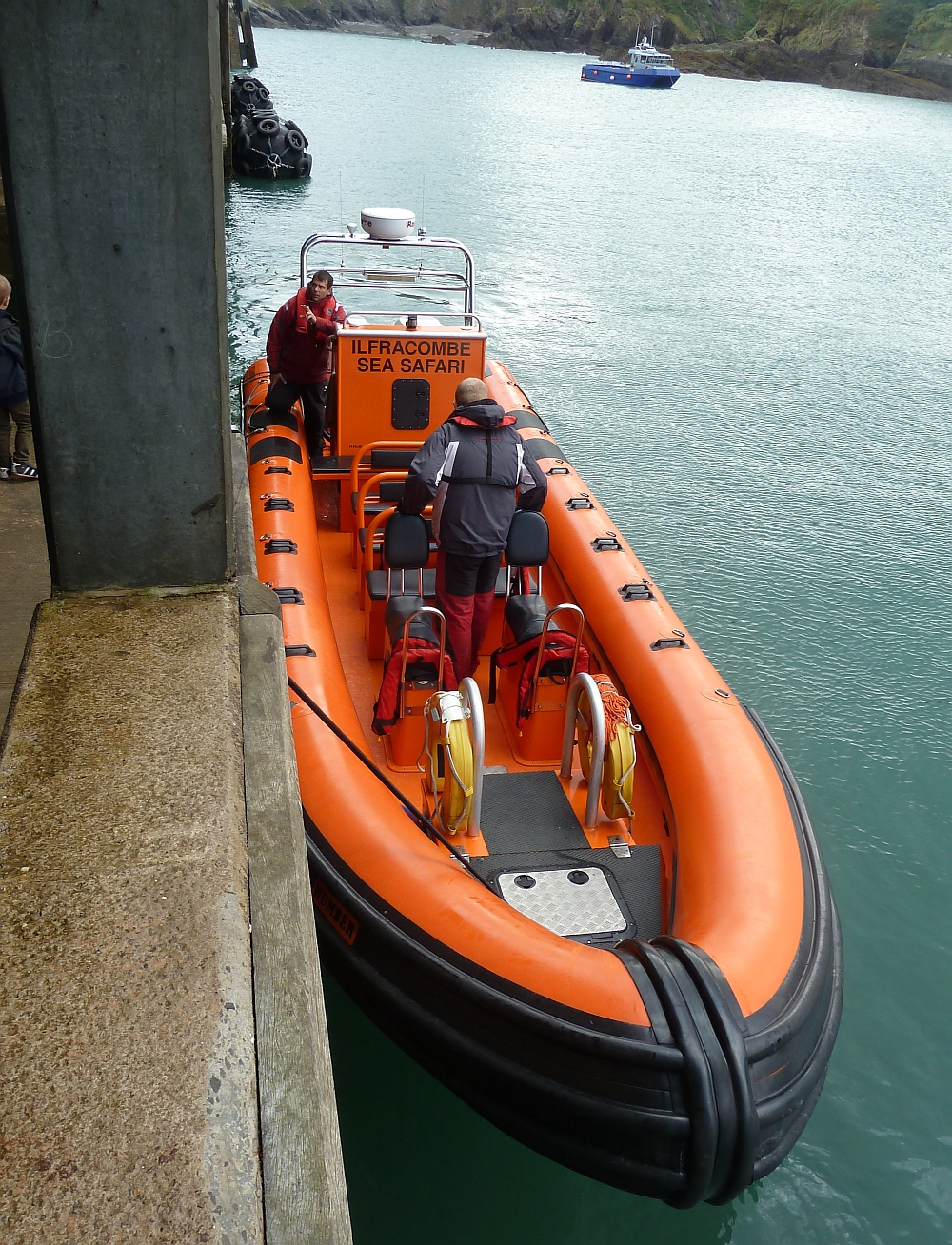
Photography: Rob Farrow via Wikimedia Commons (CC BY-SA 2.0). Representative image, not the reviewed product.